
Technology Roundtable
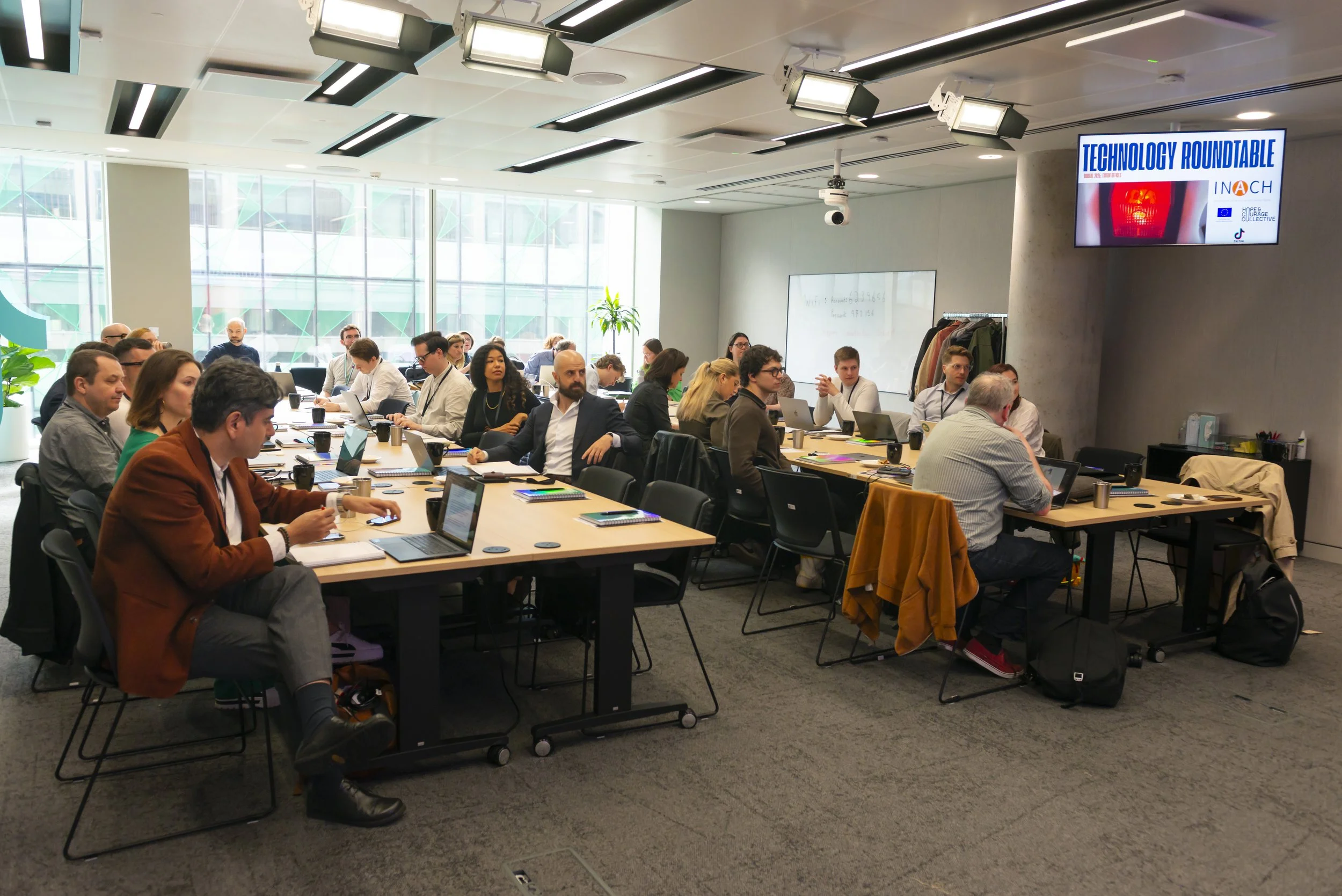
In June 2026, INACH organized the 'Technology Roundtable' in Dublin with various stakeholders where INACH and Textgain also presented the Dutch Cyberhate Neutralization Hub.
The presentation outlined the project's focus: identifying and analyzing bot-driven activity on TikTok and investigating how coordinated amplification influences online discourse and the spread of harmful narratives.
The project was launched in response to growing concerns regarding the role of automated accounts in shaping public debate. While attention often focuses on isolated instances of illegal or highly toxic content, the research demonstrated that online harm can also arise from the persistent amplification of content with relatively low toxicity. This process can lead to the gradual normalization of exclusionary narratives, discriminatory language, and extremist views.
The researchers demonstrated how automated and coordinated networks contribute to the spread of narratives regarding immigration, religion, nationalism, and conspiracy theories. In the Dutch context, the project identified recurring themes such as antisemitic, Islamophobic, anti-immigration, and xenophobic rhetoric, as well as narratives surrounding the so-called "great replacement" theory and slogans like "Our Own People First."
A key finding presented during the session was that harmful narratives are not always disseminated through explicit hate speech. Instead, coordinated activity often promotes language and concepts that appear less harmful at first glance but contribute to the gradual normalization of exclusionary or discriminatory ideas. Participants discussed, among other things, the growing prevalence of terms like "remigration," which appear increasingly often in public debate yet can serve as a stepping stone to more extreme narratives.
The project’s analysis focused on TikTok discussions surrounding the 2026 Dutch municipal elections. Researchers collected data using election-related search terms, public figures, and political topics from various municipalities. Additionally, they developed control datasets based on general TikTok activity. This enabled a comparison between political and non-political discussions and provided insight into the role of automated behavior in election-related online conversations.
The methodology employed combined various behavioral indicators characteristic of bot activity, including posting frequency, timing patterns, response speed, and the degree of coordination between accounts. The researchers explained that higher scores indicated behavior more closely resembling that of bots. Furthermore, network analysis was used to reveal patterns of coordinated amplification.
One of the most striking findings was that approximately one-third of the analyzed online discussion appeared to originate from accounts exhibiting bot-like characteristics. Network visualizations revealed clusters of coordinated accounts that amplified messages concerning political figures and controversial social issues. This points to organized efforts to boost the visibility of specific narratives.
During the discussion, it was emphasized that coordinated amplification should be viewed as a systemic risk rather than solely as a content moderation issue. Participants noted that bot-driven campaigns can disrupt public discourse, even when individual posts do not violate platform rules or legal standards. By artificially inflating the visibility and apparent popularity of certain viewpoints, coordinated networks can influence public perception regarding what is considered a widely held or mainstream opinion.